Ayon Banerjee
Ayon Banerjee
Managing Director – APAC Client Segments



By Ayon Banerjee, managing director, Black & Veatch APAC client segments
As we approach Enlit Asia 2026 in September in Jakarta, the real question facing Southeast Asia’s power industry leaders is not whether electricity demand in the region is rising but whether the region can keep pace.
From hyperscale data center development across the region to rapidly expanding manufacturing corridors, infrastructure across Southeast Asia is approaching its operational limits. Meanwhile, supply chain disruptions and fuel market volatility are impacting financial investment decisions, national energy plans’ priorities and project delivery schedules.
Dialogue at Enlit Asia comes at a critical moment for the region, and we anticipate three themes:
Managing a new wave of growth: The region is experiencing a surge in demand. Hyperscale data center growth, combined with industrial electrification, electric vehicle (EV) adoption and downstream processing is compressing what would traditionally be eight to 10 years of demand growth into just three years. The challenge is not just scale but timing. Planning cycles are shrinking, leaving organizations with limited opportunities for proactive strategy and forcing a reactive approach to system expansion.
Grids are under pressure, and the transmission infrastructure in countries including Indonesia, Vietnam and the Philippines is not fully equipped to support the rapid increase and changes in load profiles. Expanding transmission and distribution infrastructure is inherently more complex than adding generation capacity requiring land acquisition, permitting, stakeholder coordination and extended development timelines.
Supply chain pressures: With so much global growth and trade uncertainties, original equipment manufacturer (OEM) pricing premiums are increasing, placing added pressure on project economics and engineering, procurement and construction (EPC) contracting. Advanced-class gas turbine manufacturing slots, for example, are effectively booked several years in advance. This means developers must commit early through reservation agreements, often with significant milestone-based payments that strain cash flow. Lead times for other critical equipment, including transformers and switchgear, are extending to 18 to 24 months or more.
The region also is facing a shortage of available EPC capacity to deliver the growing project pipeline. EPC contractors are limited by workforce availability and deployment capacity while more attractive project returns may be possible in other markets, further reducing participation of global contractors.
The energy transition is even more complex: Scaling and further progressing the energy transition is proving a challenge across the region. Integration of intermittent renewables and energy storage onto grids must continue. Further complexity, however, awaits as the region explores expanding and financing cross-border grid connections, dealing with an ongoing reliance on existing coal assets with long operational lifespans, as well as planning for emerging and alternative technologies. Nuclear energy is back on the agenda, and countries such as Indonesia are planning national-level biogas and waste-to-energy programs.
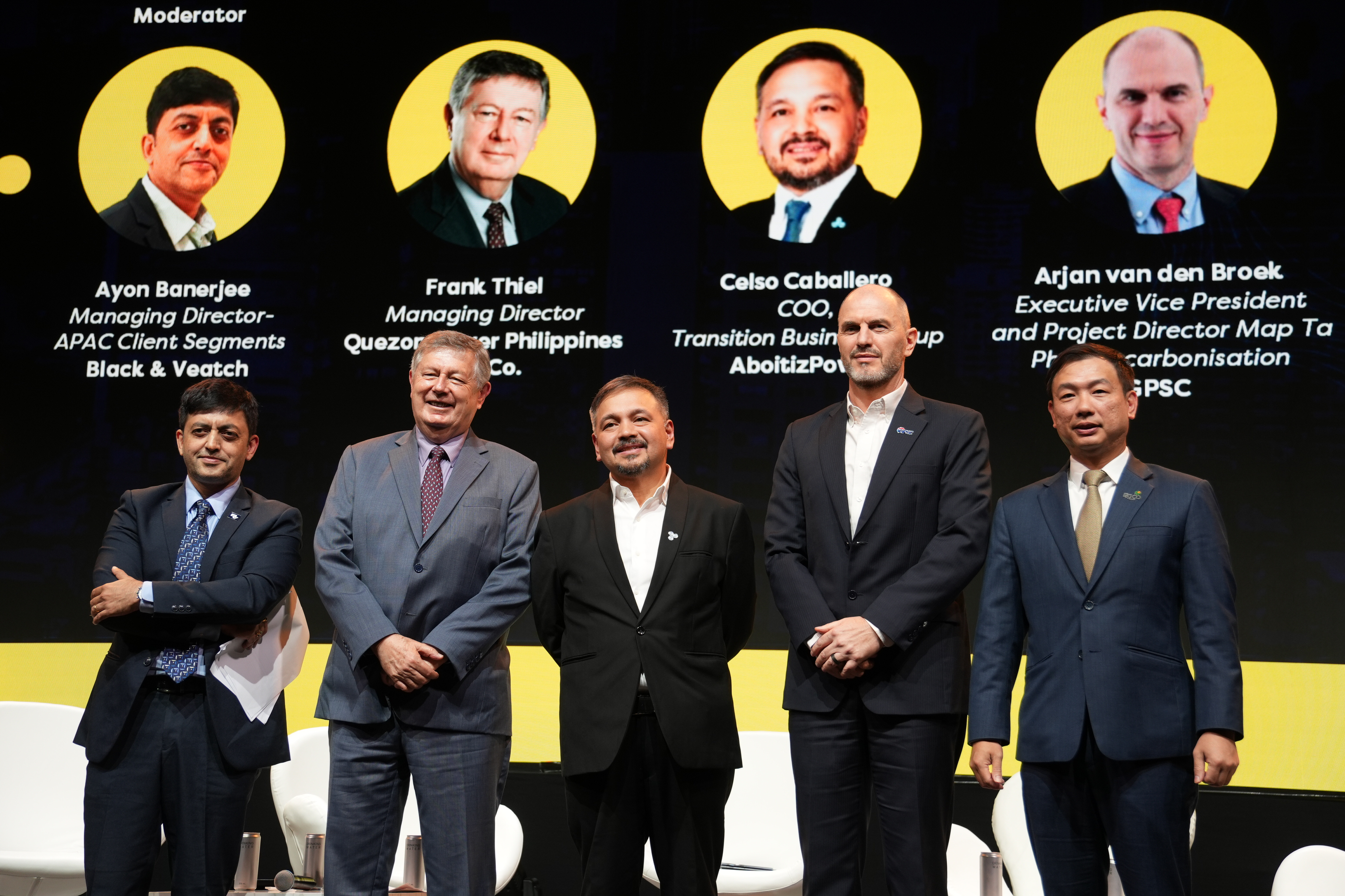
Dialogue at Enlit Asia will converge on how to deliver new project developments against this confluence of acute, fluctuating and evolving issues.
From decades of delivering success in the region, we know that risk must be understood and mitigated better in these circumstances through earlier conversations, front-end strategy and planning, and engineering work that better defines scope, cost and schedule, reducing uncertainty and improving decision-making across project phases.
This might mean exploring options such as getting ahead of supply chain bottlenecks by structuring your project beyond traditional EPC arrangements — not typical in the region. This can secure critical equipment and reduce long-lead risks. It may also mean anticipating mid-stream equipment supply issues, working with partners such as Black & Veatch with accessible and prequalified global supplier relationships.
Tempting as it will be in this market dynamic, the industry cannot lose sight of long-term asset performance. Again, early strategic assessment will prove vital. Such assessments include modelling commercial performance of the asset over its entire lifecycle and how it will perform alongside other existing and future assets within the grid system. Taking time to future-proof asset investment will yield sustainable financial and operational success of the region’s next generation of power infrastructure, with that success determined by optimization, modernization, cybersecurity and resilience.
We look forward to these productive and stimulating deliberations with our clients at Enlit Asia. This is a challenging moment for the industry but not one short of opportunity.
Ayon Banerjee
Managing Director – APAC Client Segments