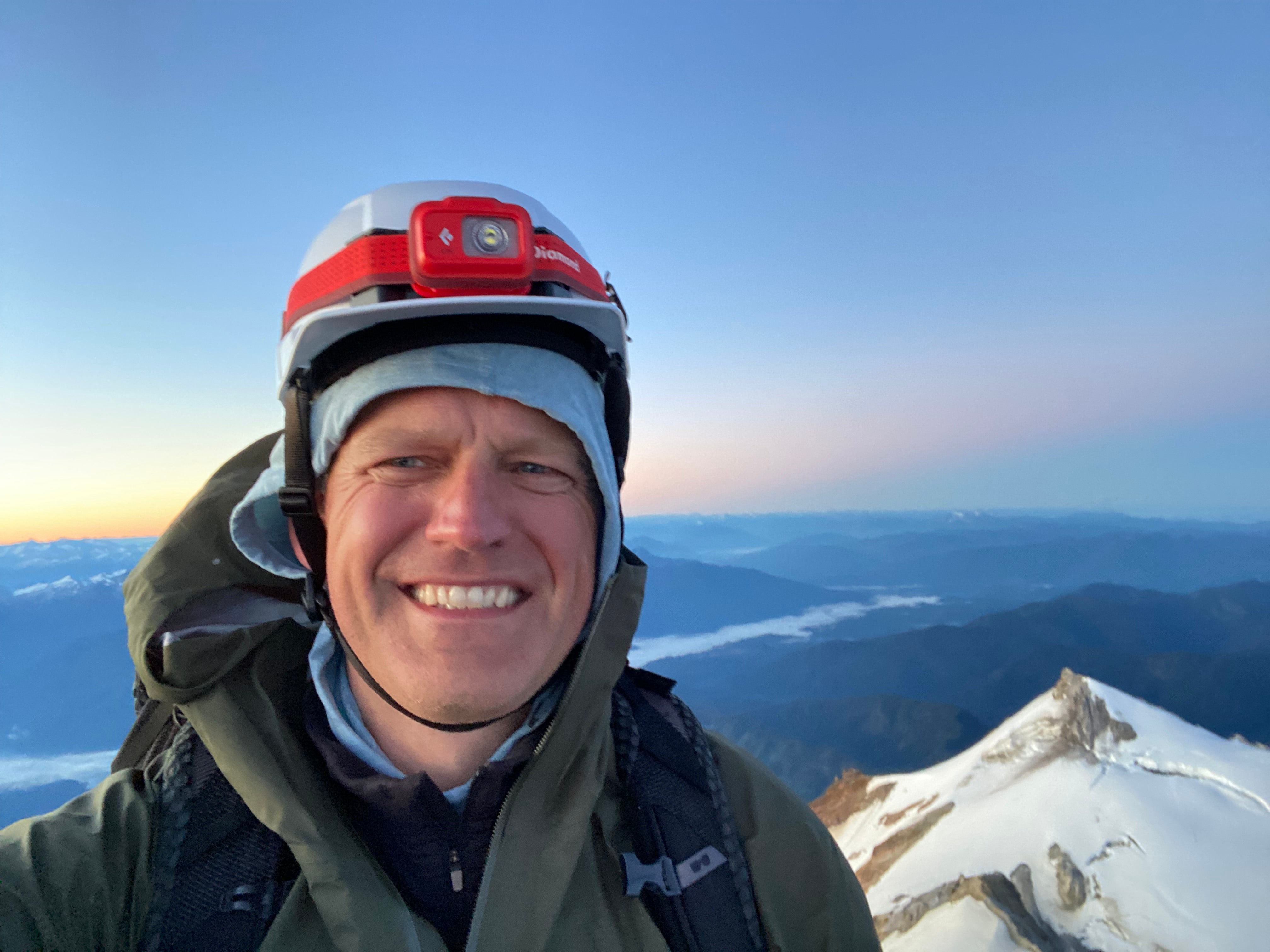
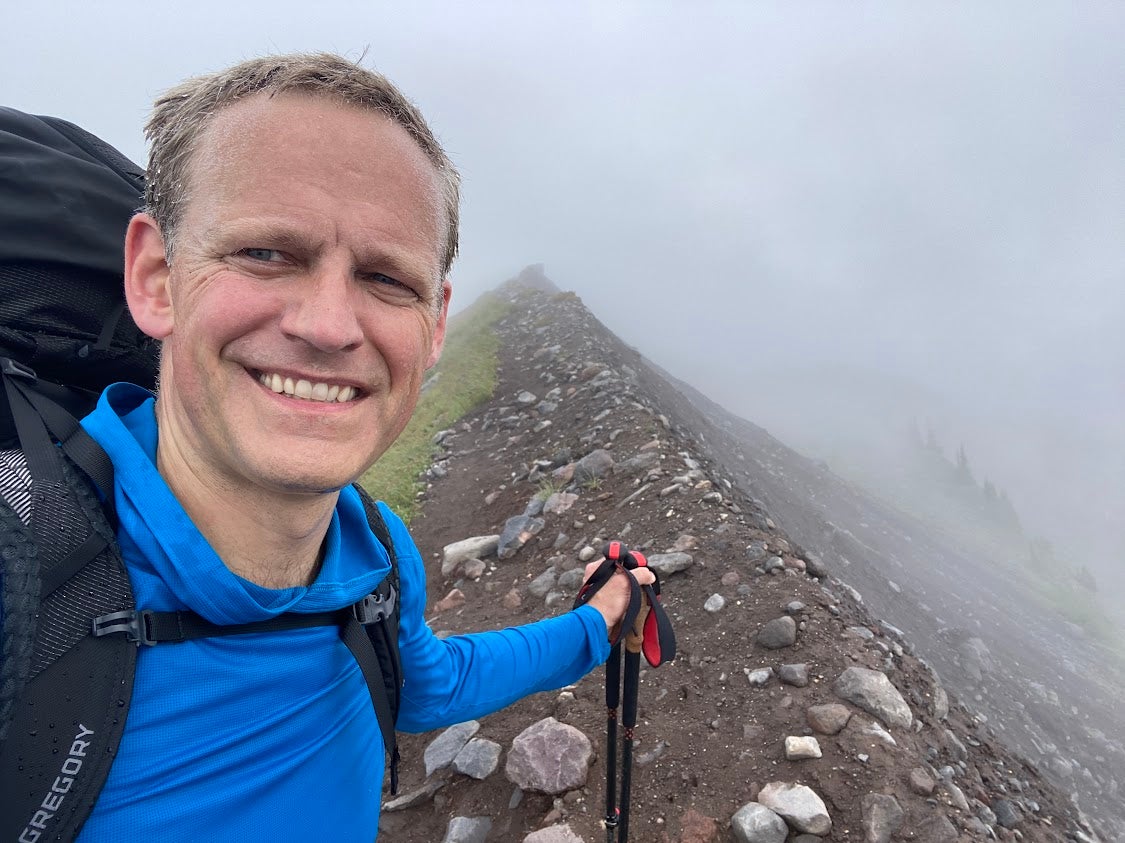
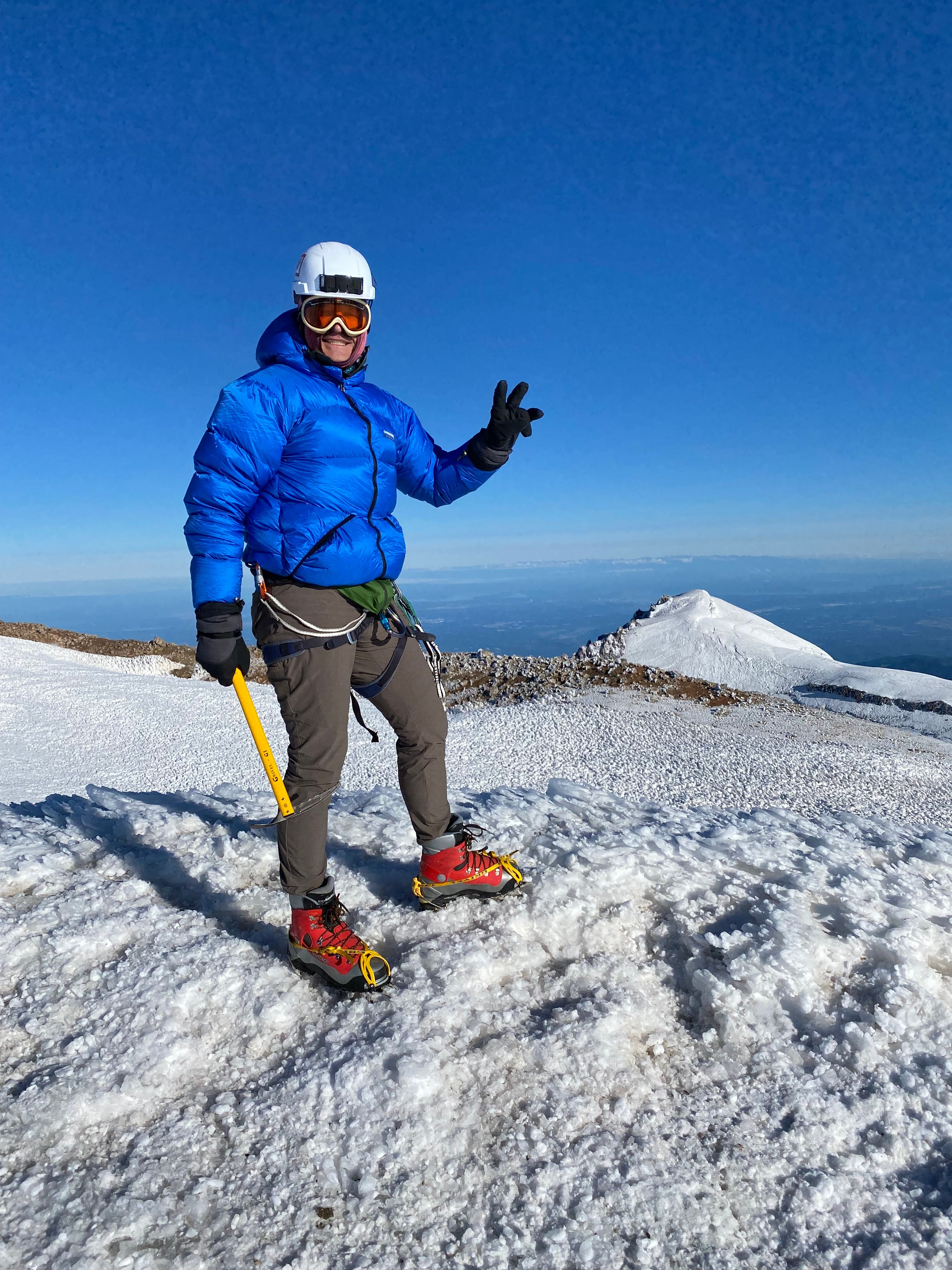
Once Seattle-based Elenbaas committed to take on Rainier, weekends became filled with training hikes and other workouts, building stamina and muscle. Smaller summits became steppingstones to larger ones. Equipment was gathered and tested. Scenario plans were mapped out not just for the climb but for safety, logistics and contingencies.
This adventure with two other men wasn’t just about reaching the top but about building a team that could rely on each other in unpredictable conditions.
Leadership under pressure, on the line
On Rainier, preparation meets reality quickly: glaciers shift, weather changes and fatigue sets in. Hours of prepping included practicing rope systems, rehearsing rescue scenarios involving traversing seemingly bottomless crevasses, and walking through potential risks. Everyone knew their role and what to do if something went wrong.
At one point, something did.
Late in the descent during what became more than two days on the mountain, one of the climbers lost footing and began to tumble. It happened quickly — the kind of moment that can spiral for the unready. But Elenbaas and another climbing teammate reacted exactly as practiced: they dug in, leaned back and braced, firmly gripping the rope until it finally tightened and arrested the colleague’s slide, sparing injury — or worse.
Back at work, the parallels were hard to miss. Leading a project team carries similar responsibilities involving anticipated risks, preparation and the creation of an environment in which people trust each other under pressure.