Cybersecurity resilience starts with an assessment and a roadmap
Cybersecurity often breaks down into visibility and control — when you can see what is happening in your environment, you can do something about it. Assessments are often the first step in obtaining that visibility and control.
An initial cybersecurity assessment serves as an entry point, helping organizations understand their vulnerabilities and establish a baseline for improvements. There are an ample number of frameworks available to support OT cybersecurity assessments. For example, the U.S. Environmental Protection Agency’s (EPA) water cybersecurity assessment tool, the American Water Works Association’s (AWWA) cybersecurity risk management tool, NIST SP800-53/82, ISA/IEC 62443 and more.
The challenge with assessments is finding the expertise to effectively perform them. To conduct an effective assessment, at least one cybersecurity expert should facilitate it and clearly explain the objectives, as well as the importance and the benefits to the organization. Another important success factor is the participation of the subject matter experts (SMEs) in supervisory control and data acquisition (SCADA) IT, operations, maintenance and engineering.
Cybersecurity is an expansive and complex topic, making this a tall order for those whose day job isn’t OT cybersecurity. Assessments typically include a significant educational component.
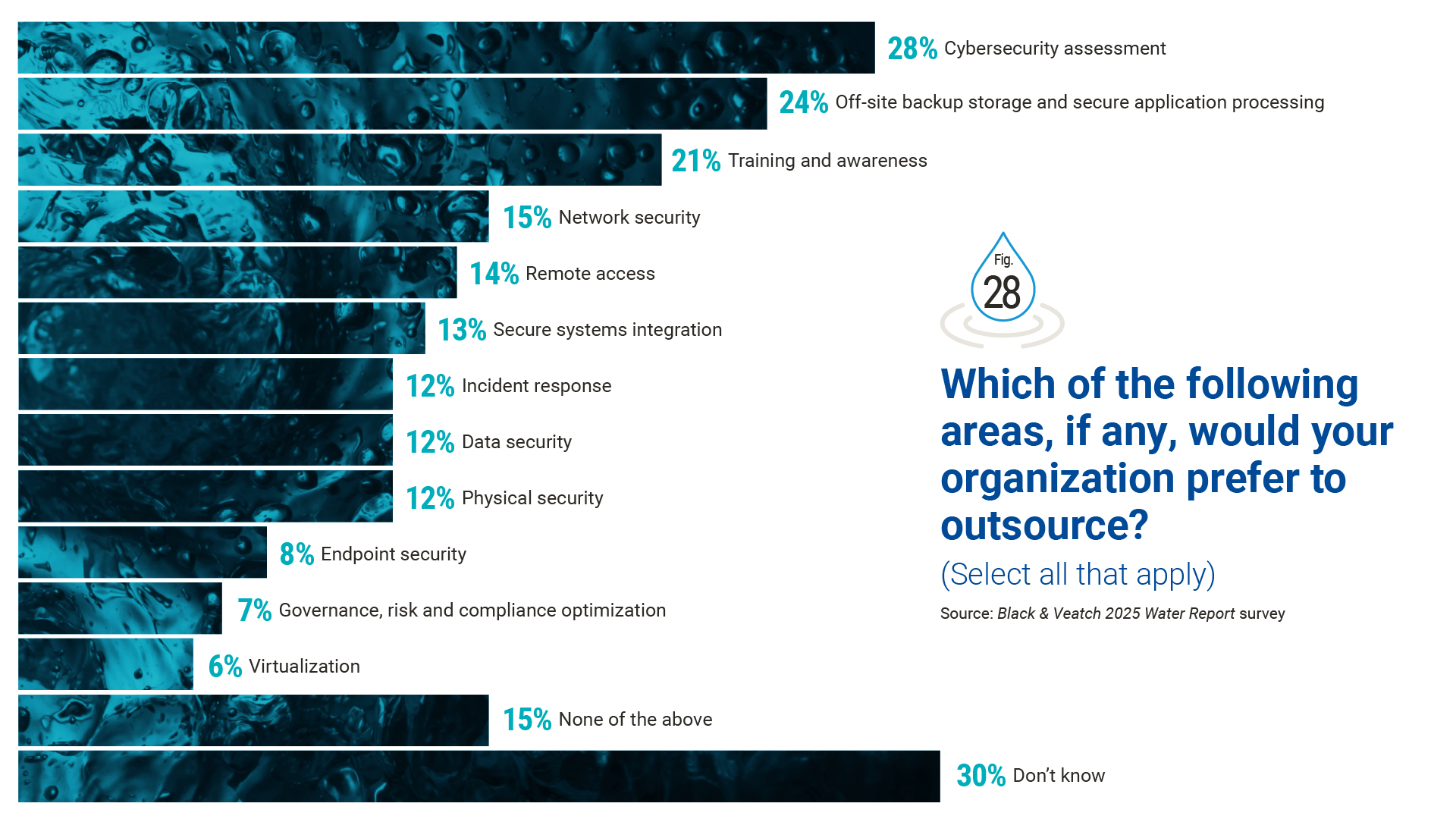
When respondents were asked which areas of cybersecurity their organizations prefer to outsource, 30% said they did not know (Figure 28). Since many respondents are unsure, they can assess their program in-house to identify areas to outsource. If not an assessment, then a workshop with a third-party vendor can help identify high-level gaps. Ideally, having a third opinion is the right move.