Across Europe, defense leaders see infrastructure as a frontline enabler of deterrence and readiness. The ability to generate combat power, sustain forces and respond rapidly is increasingly constrained — or unlocked — by critical infrastructure built, secured, connected and maintained throughout the European theater.
This theme surfaced repeatedly at the 2026 Society of American Military Engineers (SAME) Europe Tri-Services Regional Summit this March in Frankfurt, Germany, with a focus on the practical realities of rapidly delivering mission-ready infrastructure across allies’ and partners’ countries while accommodating specific U.S. Service component needs.
Over the past decade, NATO has reinforced deterrence and defense along its eastern flank. It has paired increased readiness with a stronger focus on multi-domain resilience including air and missile defense, cyber and protection of critical infrastructure. A stark reminder why it matters: Ukraine’s recovery needs are estimated to be near $588 billion. The example shows how infrastructure is a strategic target and constraint. Its message is clear. Don’t wait for a crisis to strengthen resilience.
Leaders prioritize mission-critical infrastructure at SAME Europe Tri-Services Regional Summit
The biennial tri-services summit brought together senior engineering leaders and practitioners from the U.S. Army, Navy and Air Force; NAVFAC; IMCOM Europe; USACE; NATO allies and European partners; and industry. The goal: Address shared challenges and emerging requirements across Europe, Africa and the Central Command areas of responsibility with attendees from 17 countries.
The agenda framed Europe as a theater where mission-critical infrastructure — energy, water, facilities, airfields, transportation and digital systems — must perform reliably across multiple host nations and evolving threats. It also emphasized delivery. How government and industry need to align, to modernize installations, improve resilience and accelerate outcomes. Hundreds of participants joined from U.S. services, mission partners and industry, reflecting the scale of shared urgency and coordination needs across Europe-focused priorities.
Readiness is becoming distributed and, therefore, presenting new challenges
A defining shift in U.S. strategy in Europe is the move toward distributed operations. The infrastructure equation has changed from “a few big hubs” to “a network of credible sites.” The U.S. Air Force’s Agile Combat Employment (ACE) doctrine describes the operational approach that disperses forces across multiple locations to improve survivability and complicate adversary targeting while providing opportunities to deploy to and retract from multiple airfields as battle conditions dictate.
That logic surfaced directly in Frankfurt through a session on “Dispersed Airfield Criteria: … What’s Needed Next?” The session signaled that dispersed basing is shaping standards, designs and investment decisions.
A distributed posture increases the premium on local relationships and repeatable delivery playbooks. When requirements stretch across countries and sites, speed depends on trusted partnerships, proven pathways and teams that can execute consistently in different regulatory environments.
Five infrastructure priorities defining Europe’s deterrence and readiness
1) Infrastructure modernization and fortification: the “foundation” of deterrence
Military leaders reinforced that infrastructure underpins deterrence by enabling sustained presence, rapid reinforcement and mission assurance across a dispersed theater.
What success looks like:
Execution speed and flexibility. Reduce schedule risk, avoid scope creep and deliver right-sized solutions that meet operational needs quickly, especially for upgrades supporting rotational forces and evolving missions.
Collaboration with NATO and allies. Prioritize interoperable solutions and shared approaches to feasibly support collective defense.
Getting the permitting and code compliance understood, well defined and communicated to the AEC (architecture, engineering and construction) community across all the different national, regional and local infrastructure compliance enforcement agencies in Europe.
Bottom line: Modernization is posture.
2) Integrated planning across borders: host-nation alignment as a readiness multiplier
The delivery environment in Europe is complex. Summit sessions touched on the complexities, including host nation requirements, long-range planning, environmental regulations and multilayered approval processes.
What success looks like:
Early collaboration among master planners, engineers and stakeholders to identify constraints early and prevent rework later.
Linking planning efforts directly to programming actions and design provides consistency through all stages of a facility or infrastructure project to ensure that it supports the warfighter and is delivered in a timely manner.
Local presence and trusted partnerships: Proximity matters for navigating requirements and sustaining mission continuity across borders.
Collaborating with local infrastructure compliance and enforcement agencies to communicate future design and construction requirements: prevent compliance surprises.
Bottom line: In Europe, “planning” is an operational capability because it determines how quickly infrastructure can be sited, fielded and adapted.
Stakeholder engagement was emphasized during the “Cross-Cultural Planning Toolkit” session in Frankfurt, highlighting the importance of understanding different political systems, values, and standards to effectively implement sustainable, resilient mission-critical infrastructure. Research shows that plans developed with stakeholder involvement are more likely to succeed than those created without their input. Planning should occur in collaboration with host nations, who bring unique cultural, political, and socioeconomic perspectives to the process.
3) Resilient, distributed infrastructure: energy, water, communications and continuity under stress
Summit discussions reinforced the need for distributed, resilient, adaptable infrastructure, including hardened facilities, secure communications and reliable energy and water systems, to support operational continuity and rapid deployment. The broader strategic context is clear: NATO describes its eastern flank posture as increasingly multidomain, where resilience and the protection of critical infrastructure shape readiness outcomes.
What success looks like:
Design solutions that perform across multiple sites and multiple nations, using repeatable solutions that can be adapted (not reinvented) per location.
Pair modernization programs with sustainment thinking as resilience depends on maintenance and operational discipline.
Bottom line: “Resilient” means the mission continues even if systems degrade — power, water, comms, and facilities included.
4) Security is physical plus cyber plus accreditation
Facility security requires one layer of rigor. Digital security requires another. And their integration is essential. The summit delved into cybersecurity risks in overseas military construction and discussed practical measures to protect infrastructure, reflecting the reality that digital threats can disrupt physical readiness. Meanwhile, ICD 705 establishes uniform requirements for Sensitive Compartmented Information Facilities (SCIFs). It requires that SCI be processed or discussed only in accredited SCIFs, making “accreditation-ready by design” essential.
What success looks like:
Bottom line: In Europe’s threat environment, secure infrastructure is defined by how it performs technically, operationally and in compliance terms.
5) Design-build and accelerated delivery: moving at the speed of the mission
Agencies highlighted increased reliance on collaborative delivery models such as design-build to improve speed, cost certainty and constructability for mission-critical projects.
Procurement modernization is an important backdrop. The federal government is undertaking a major FAR overhaul initiative intended to simplify acquisition rules and improve outcomes. Watch carefully as it may influence how projects are structured and executed.
What success looks like:
Bottom line: Speed depends on contracting strategy, planning maturity and execution discipline working together.
Building resilient infrastructure for mission assurance success in Europe
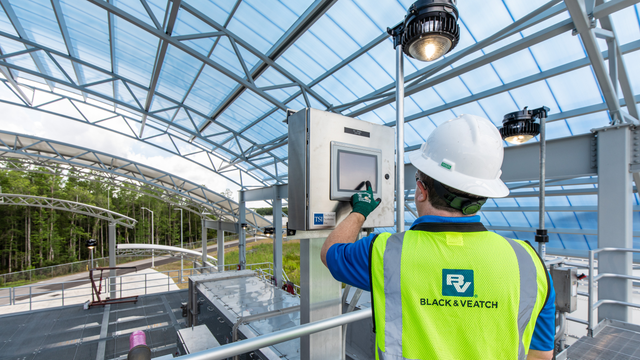
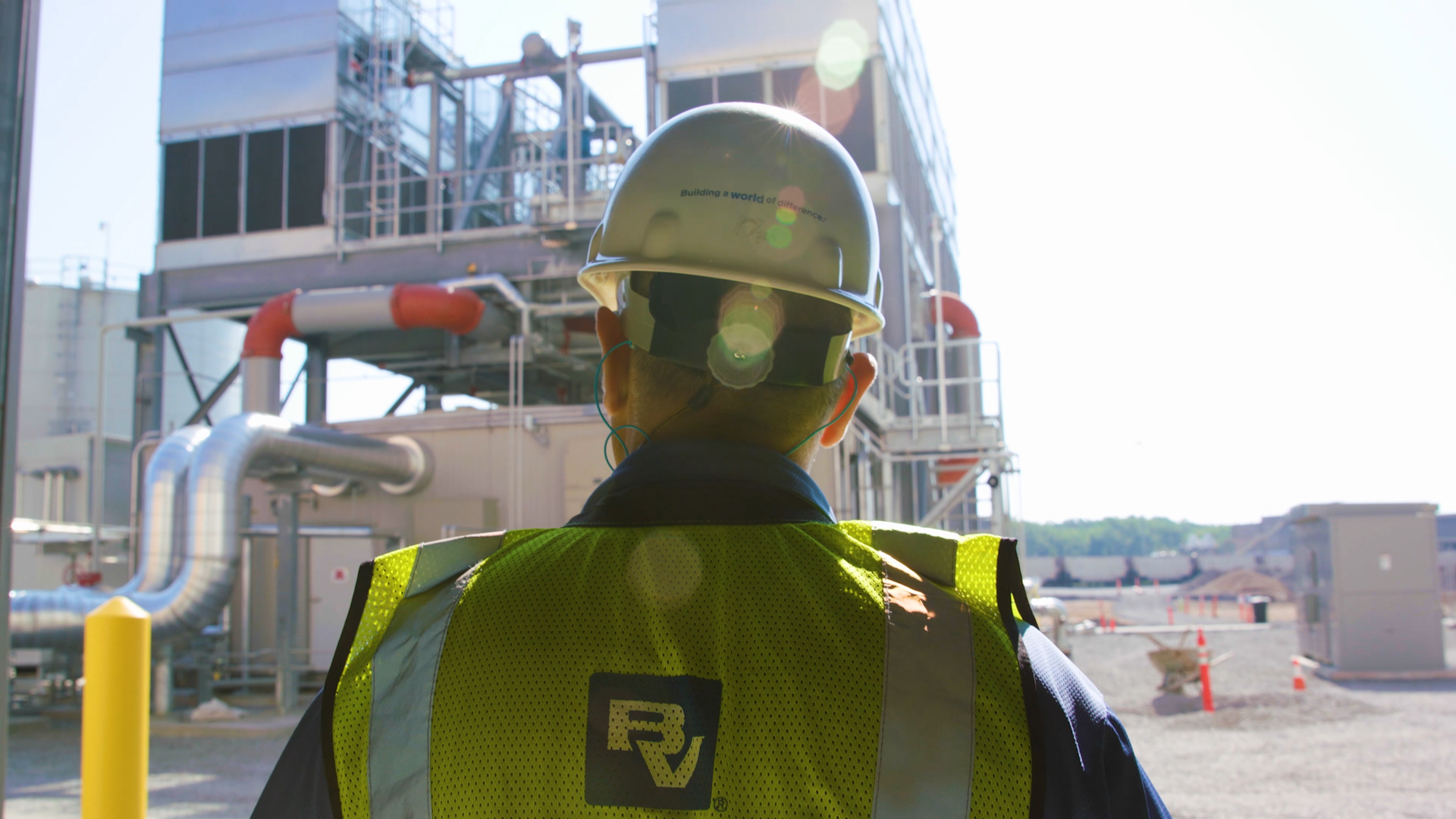
Industry partners are responding to these priorities with sustained regional investment. Black & Veatch maintains offices in Wiesbaden, Germany, and Poznań, Poland, rooted in Europe for decades, providing continuity, local insight and trusted support to U.S. federal agencies operating across Europe. This enduring presence enables close collaboration with military clients, host-nation stakeholders and partners to deliver resilient energy, water and mission-critical infrastructure solutions aligned with evolving operational needs.