Reports
2025 Electric Report
Infused with insights from 500 U.S. energy industry stakeholders, Black & Veatch’s 2025 Electric Report is the benchmark to see where you stand — and where to lead next.

Texas is no stranger to energy extremes. As a deregulated, high-demand state with a booming population and data center market, Texas faces a complex energy landscape.
Governed by the Electric Reliability Council of Texas (ERCOT), Texas leads the nation in solar and battery storage deployment, proof of its ability to scale fast and adapt. Recent grid crises have exposed vulnerabilities, but the state is actively addressing them. From competitive renewable energy zone (CREZ) transmission expansion to Gulf Coast substation upgrades, Texas is rewriting the resilience playbook.
With guidance from Black & Veatch, Texas is proving what’s possible when resilience meets innovation. These lessons can help utilities nationwide plan for uncertainty.
Backed by insights from 500 U.S. energy industry stakeholders, the Black & Veatch 2025 Electric Report explores the nation’s most pressing utility challenges. In Texas, where these issues rank among the top priorities, utilities are advancing strategies to address grid congestion, aging infrastructure, workforce shortages and cybersecurity threats. Their actions are shaping a more resilient grid, ready for tomorrow’s demands.
Grid congestion. Rapid load growth from data centers, manufacturing and population increases is pushing transmission lines to capacity. ERCOT’s 2024 Regional Transmission Plan projects summer peak demand could exceed 150 GW by 2030, nearly double 2023 levels, with data centers alone accounting for 50 GW. ERCOT’s Real-Time Co-optimization (RTC), launching in December 2025, will optimize energy dispatch and is projected to deliver more than $1 billion annually. The Public Utility Commission of Texas (PUCT) has approved the state’s first 765-kilovolt (kV) transmission lines to serve the Permian Basin, one of Texas’ most congested regions.
Aging infrastructure. Texas utilities are modernizing assets while integrating renewables and preparing for high-demand customers. Aging infrastructure was cited by 29% of 2025 Electric Report respondents and is part of a $1 trillion replacement need by decade’s end. Data centers connecting directly to transmission accelerate the need for upgrades. The PUCT’s resilience plan and the $9 billion Texas Energy Fund are helping finance modernization projects statewide.
Workforce shortages. 3% of 2025 Electric Report respondents cited labor challenges, from a lack of skilled workers to an aging workforce. Texas utilities are responding with workforce development programs and technical school partnerships. The Texas Workforce Commission’s Talent Connection Grant Program is helping build the pipeline needed to support grid modernization.
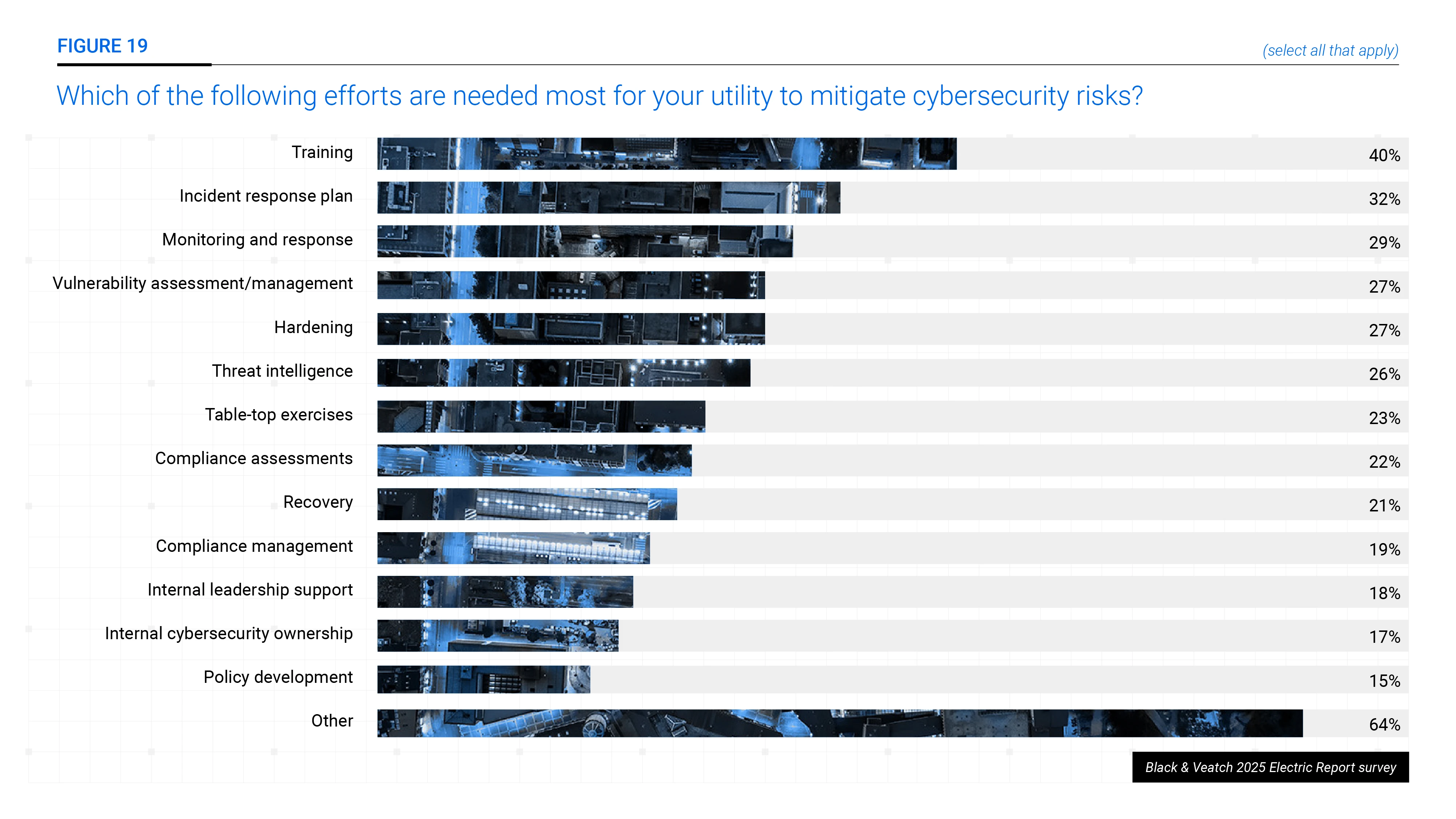
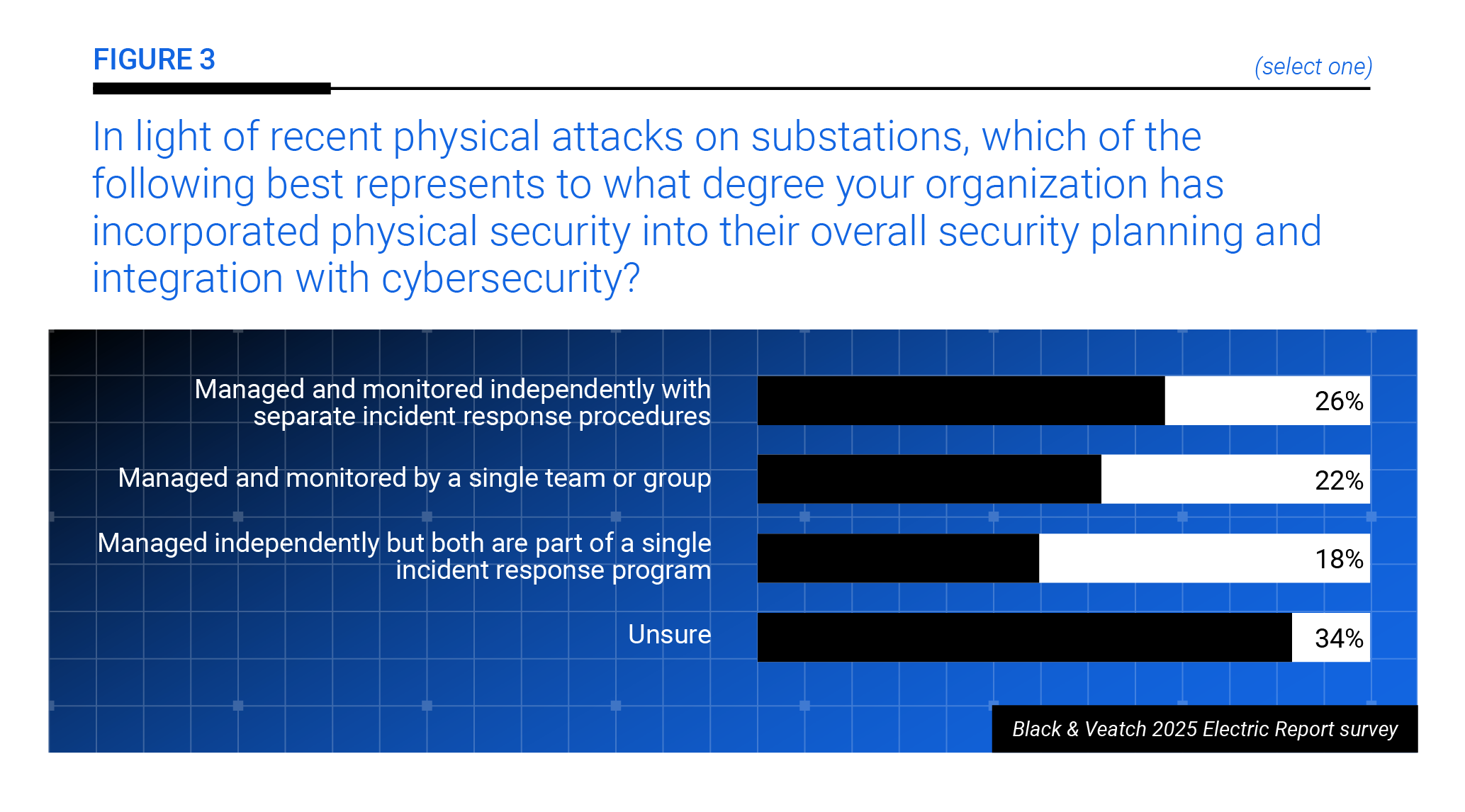
Cybersecurity. Cybersecurity is essential to a resilient grid. As industrial internet of things (IIoT) expands, so do threats. According to the 2025 Electric Report survey, utilities are prioritizing training (40%), incident response planning (32%) and monitoring and response (29%) (FIG. 19), yet 34% have not bridged the gap between physical and cyber systems (FIG. 3). Compliance requirements like NERC CIP-015-1 and PUCT-approved resilience plans are reshaping how Texas utilities secure assets.
Texas utilities are building a grid that’s not just resilient but ready to power what’s next.
With energy demand projected to double by decade’s end, Texas is rethinking forecasting and planning. Record-breaking load growth and extreme weather are testing traditional models.
ERCOT and utilities are stress-testing grid performance under heat waves, outages and fuel disruptions. These insights are shaping resilience investments and emergency response protocols, creating a grid ready to power through uncertainty.
Winter resilience. After a 2011 freeze, El Paso Electric upgraded generation assets and operational protocols. During Winter Storm Uri in 2021, El Paso maintained stable power while much of the state faced outages. Its early action remains a model for grid reliability.
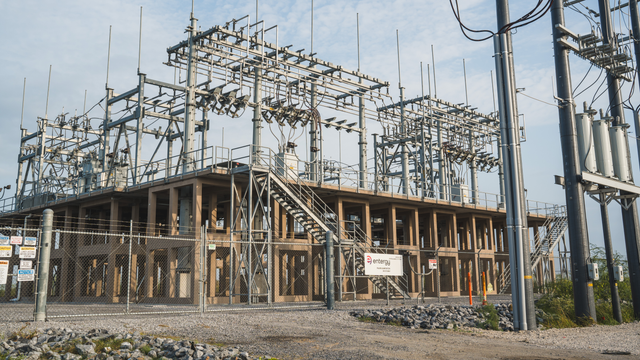
Coastal resilience. Entergy Texas is reinforcing reliability on the Gulf Coast with innovative upgrades to withstand hurricanes and tropical storms. Its first-of-a-kind substation “chain wall” protects critical equipment from storm surge and flooding.
Texas-sized growth needs Texas-sized solutions. The next few years will test Texas’ ability to plan and invest in resilience. Utilities, developers and regulators are navigating complex challenges while accelerating solutions that support reliability, flexibility and innovation.
Communities are at the heart of grid resilience. Reliable power is critical for hospitals, schools and essential services. As Texas grows, resilience ensures businesses thrive, homes stay safe and economic development continues without disruption.
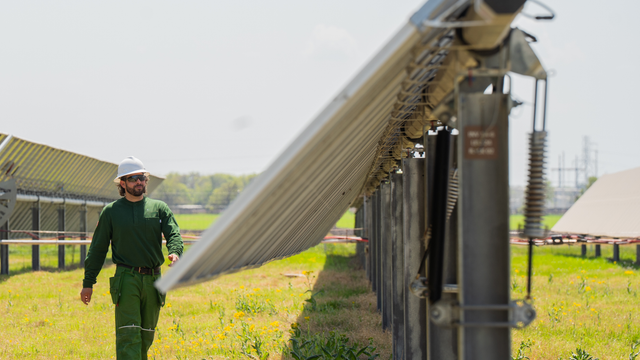
Data centers and load growth. Surging demand from data centers and new manufacturing adds unpredictable loads that bypass local distribution and connect directly to transmission. Texas is expanding transmission into high-growth areas, reducing congestion and supporting renewable integration. Projects like Avangrid’s largest solar development show how innovation is meeting energy needs statewide.
Investment in grid resilience. Texas is fast-tracking solar, wind and new generation while expanding transmission and hardening substations. Advanced technologies like grid orchestration and storage improve real-time performance. Programs like Texas Backup Power Package fund on-site systems combining solar, battery storage and gas-fired generation at critical facilities to mitigate extreme weather. The Texas Energy Fund and fast-track generation projects help utilities scale quickly.
Regulatory and supply chain challenges. Permitting delays and material shortages slow progress, but Texas is closing gaps with weatherization mandates and updated reliability standards. Utilities are adapting through new sourcing strategies and project sequencing while collaboration with regulators accelerates approvals. Compliance requirements like NERC CIP-015-1 and state weatherization mandates are reshaping how utilities secure and deploy assets, ensuring resilience and cybersecurity stay front and center.
Texas is proving what’s possible when resilience meets innovation, fast-tracking transmission, integrating renewables and hardening assets against future extremes. These lessons are a blueprint for utilities nationwide facing surging demand, aging infrastructure and unpredictable weather. Our teams at Black & Veatch are helping shape a more reliable energy future, not just for Texas but for the nation.