Reports
2025 Electric Report
Infused with insights from 500 U.S. energy industry stakeholders, Black & Veatch’s 2025 Electric Report is the benchmark to see where you stand — and where to lead next.

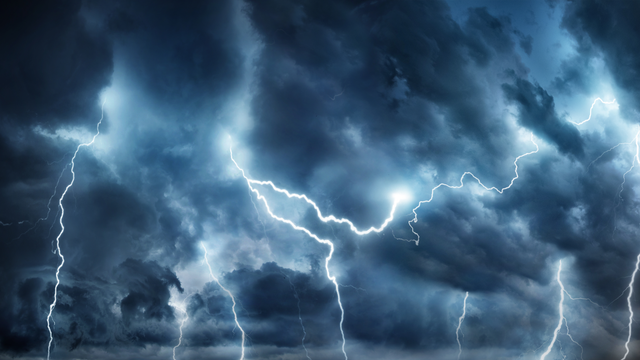
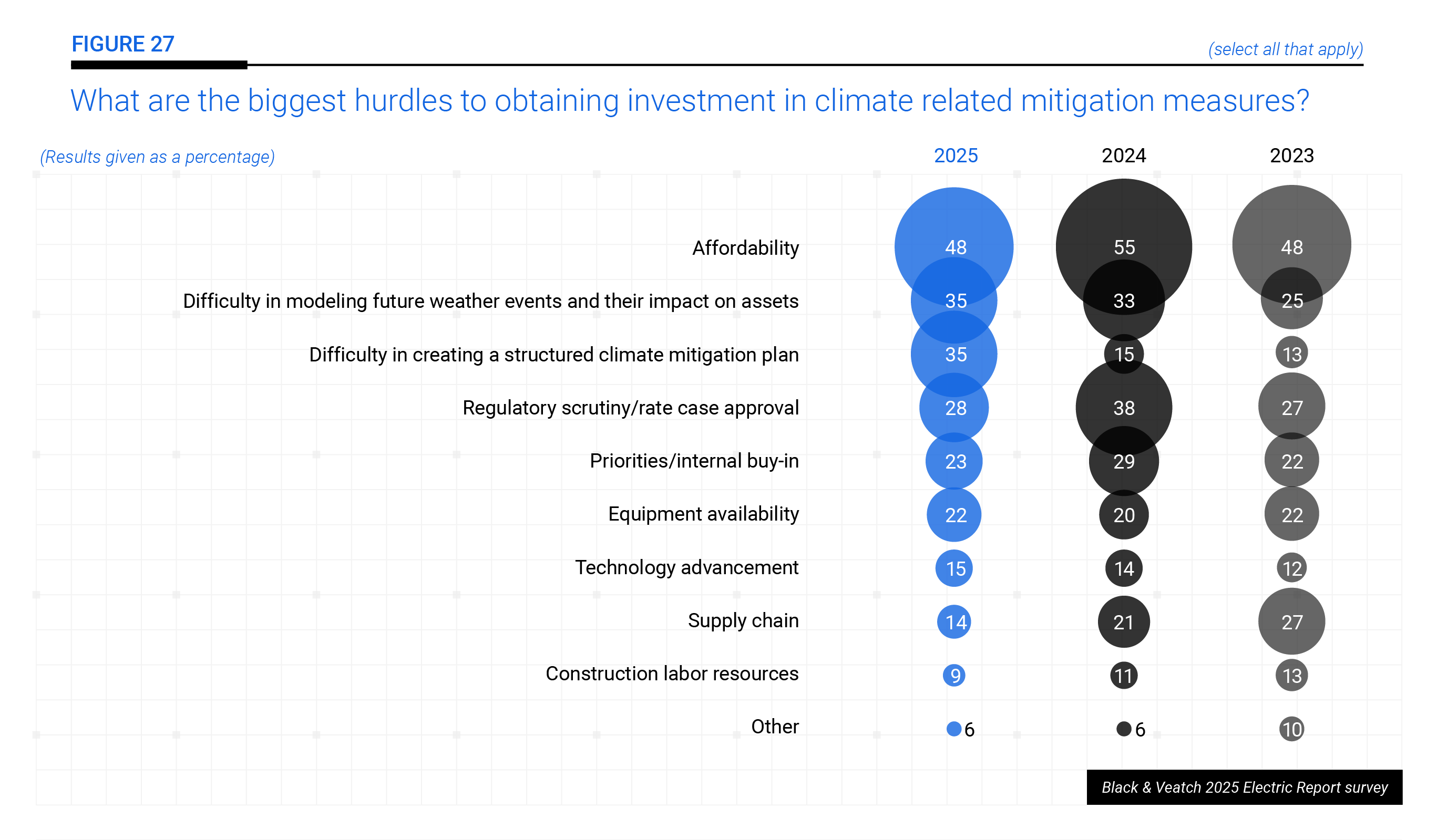
In the face of increasingly extreme weather events, utilities are committed to providing reliable service with resiliency measures that powers through any storm. But according to the Black & Veatch 2025 Electric Report, utilities are increasingly navigating an “affordability paradox” when it comes to investing in climate resilience. Forty-eight percent of respondents cited affordability as the top barrier to climate-related mitigation.
Resilience is essential to ensure that systems can quickly recover from disruptions or outages, especially as extreme weather increases. But capital costs for hardening infrastructure are high and utilities must balance these against customer affordability and regulatory constraints. What’s more, an additional challenge is emerging. The Federal Emergency Management Agency is reducing disaster preparedness grants and reimbursements, requiring utilities to plan to increase their own budget contingency funds to respond to weather events. The question becomes: Where should utilities focus their investments to maintain reliability?
1. Grid hardening and storm protection
Grid hardening delivers strong ROI by reducing outage frequency, shortening restoration times and avoiding costly economic losses. While upfront investments in measures like pole replacements, undergrounding and automation can be significant, these costs are offset by decades of avoided storm damage, emergency repairs and customer disruptions. Targeting high-risk areas and integrating smart-grid technologies amplifies reliability gains per dollar spent, ensuring utilities achieve long-term operational resilience and customer satisfaction.
2. Backup and redundancy systems
Backup and redundancy systems maximize reliability per dollar spent by ensuring continuous service during outages and reducing costly downtime. These systems, such as backup generators, battery storage and redundant feeders, provide immediate failover capability when primary assets fail, preventing widespread disruptions. While the initial investment can be significant, the ROI comes from avoided outage costs, improved customer satisfaction and compliance with reliability standards. By targeting critical infrastructure and integrating automation for seamless switching, utilities achieve high reliability gains with relatively low incremental cost compared to rebuilding entire networks.
3. Advanced monitoring and automation
Advanced monitoring and automation deliver exceptional reliability ROI by enabling real-time visibility and rapid response to grid issues. Smart sensors and automated systems such as FLISR detect faults, isolate affected sections and restore service within minutes—often without manual intervention. This reduces outage duration, lowers operational costs and improves reliability metrics, all at a fraction of the cost of large-scale infrastructure upgrades. By targeting high-risk areas, utilities maximize reliability gains per dollar spent while enhancing customer satisfaction.
4. Cybersecurity and digital resilience
Although not directly climate related, digital and physical cyber threats to utilities are increasing just like extreme weather events. Cybersecurity and digital resilience maximize reliability ROI by safeguarding the grid’s increasingly digital infrastructure against cyber threats that can cause widespread outages. Investments in robust security frameworks, continuous monitoring and incident response systems prevent costly disruptions and protect critical operational data. By focusing on proactive measures, such as securing legacy systems and OT devices, network enhancing incidence response planning and prioritizing employee training, utilities reduce the risk of service interruptions at a fraction of the cost of recovering from a major cyber event. These strategies ensure operational continuity and maintain customer trust while delivering strong reliability gains per dollar spent.
5. Community-driven resilience
Community-driven resilience maximizes reliability ROI by aligning investments with the needs of the most vulnerable and high-impact areas, ensuring resources deliver the greatest benefit per dollar spent. By engaging communities in planning and prioritizing resilience measures, such as microgrids, localized backup systems and targeted hardening, utilities reduce outage risks where consequences are most severe. This approach not only improves reliability and equity but also builds public trust and regulatory support, lowering long-term costs and accelerating approvals for resilience projects.
Investing in reliability as well as resilience planning is a balancing act. One that requires utilities to maximize value. According to the Black & Veatch 2025 Electric Report, utilities are prioritizing strategies such as backup systems, aggressive vegetation management and freeze protection—known fixes that engineers can design and crews can build. We hope the recommendations summarized here spark additional ideas. As extreme weather events become the norm instead of the exception, utilities have the opportunity to help build communities that are not only safe, but strong, adaptable and prepared for the future.