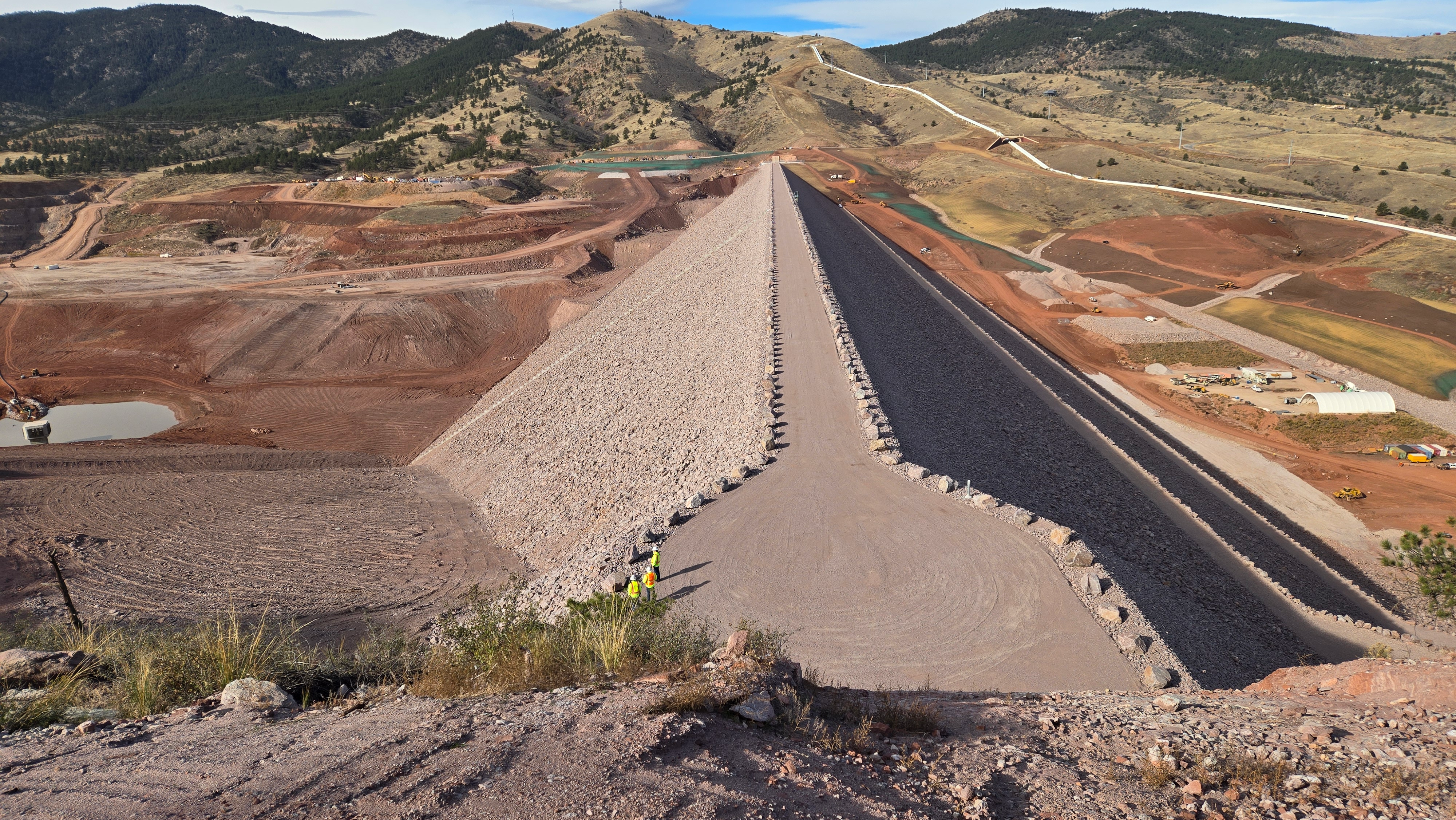
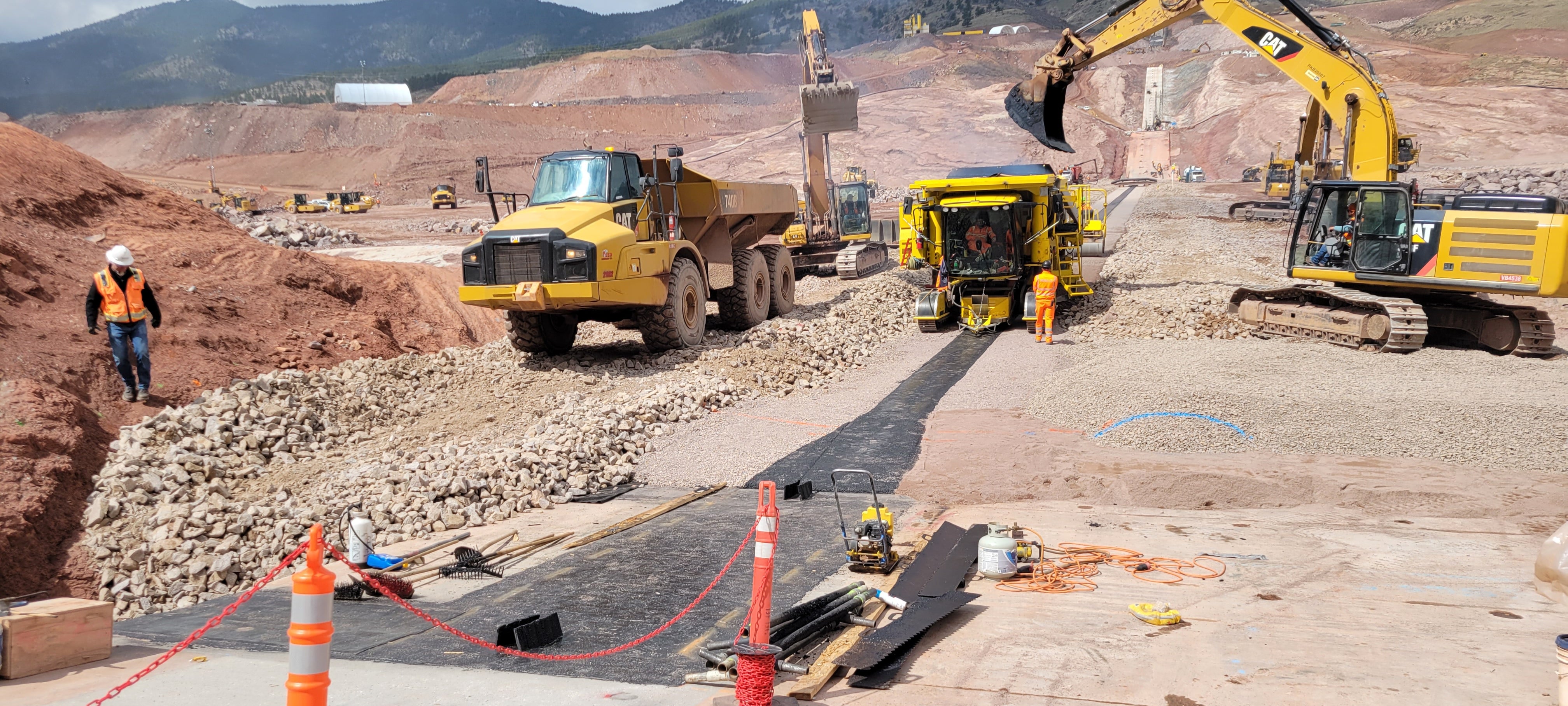
Why hydraulic asphalt concrete:
The site lacked the necessary quantities of suitable clay for an embankment with a traditional clay core.
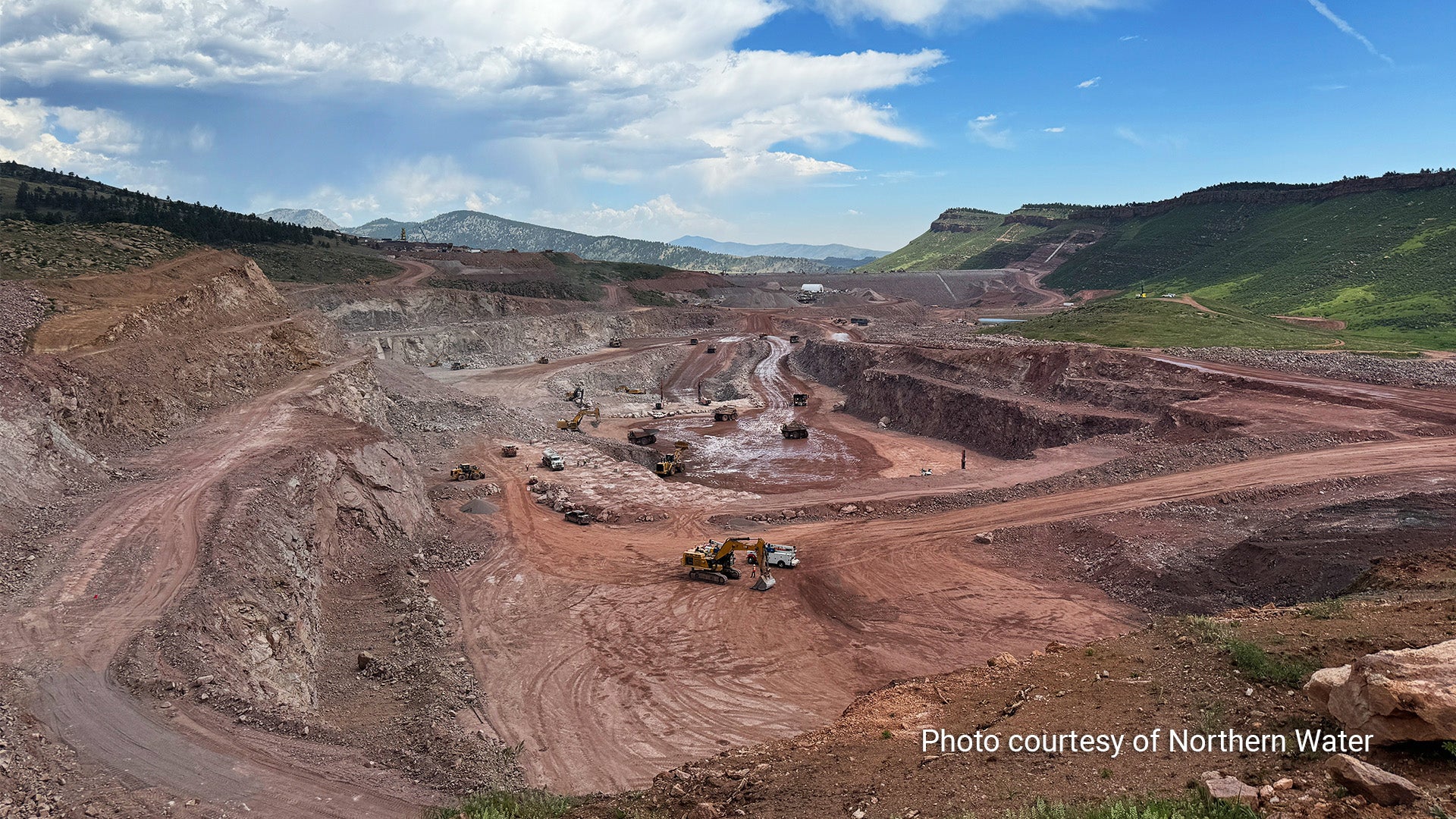
Aggregates needed to produce HAC could be mined and processed from the on-site quarry with only bitumen (oil) imported in manageable quantities.
It’s flexible and impermeable and when buried within a dam remains unaltered by the sun and other elements and chemicals that typically degrade asphalt.
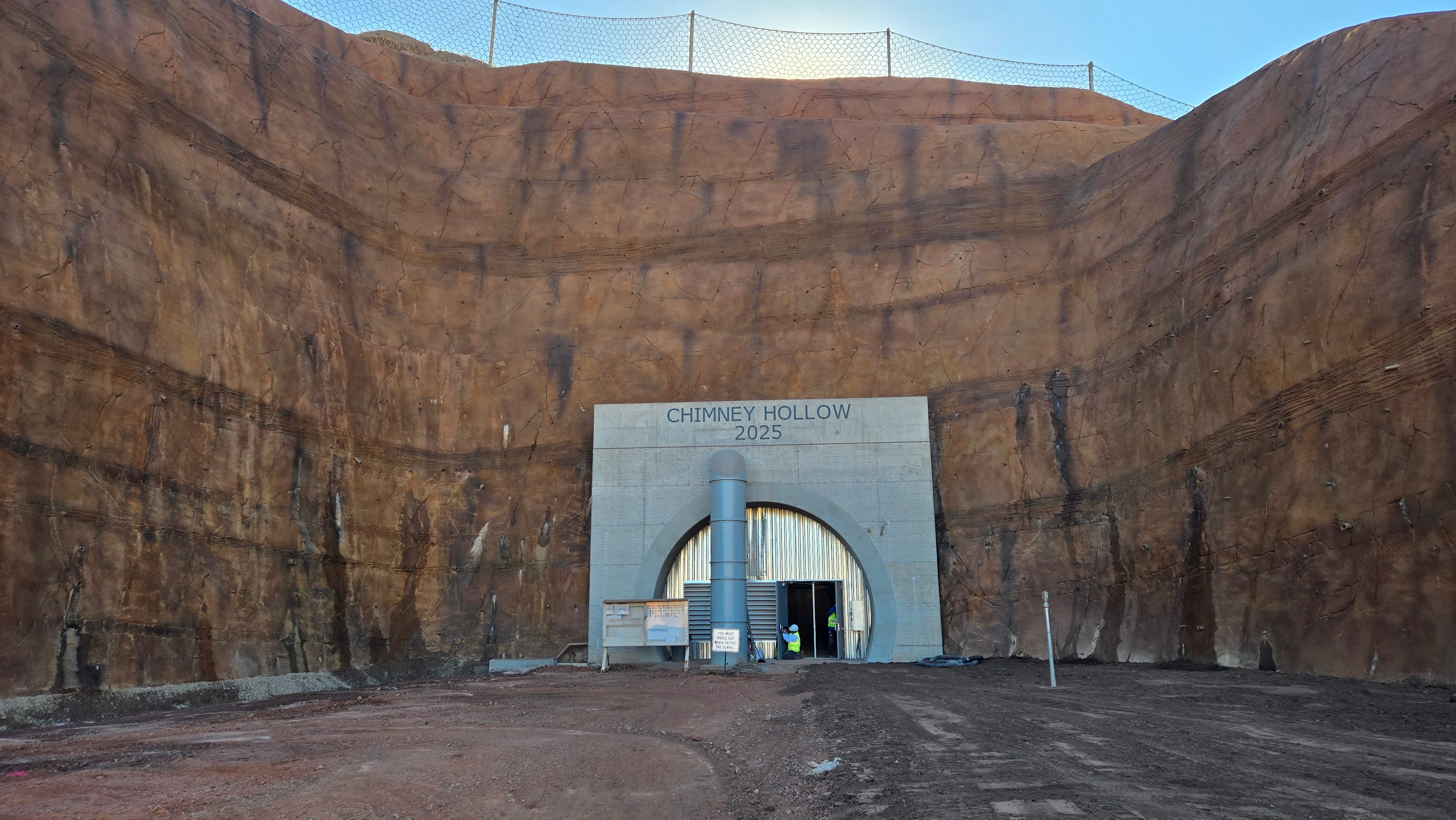
In addition to the main dam, the project features a saddle dam, spillway, inlet/outlet works and infrastructure for moving water in and out of the reservoir via the C-BT system. It also provides features for wildlife protection and recreational amenities.
Construction management mitigates risk and drives complex dam projects forward
The project took nearly 20 years to develop, including permitting. With its unique scale, type and expectations, risk mitigation was paramount. Toward that goal, Northern Water selected Black & Veatch to provide construction management services – to represent and advance the best interests of the district and the project’s many stakeholders.
The work included administering the contract on behalf of Northern Water, reviewing schedules and pay applications, negotiating change orders and managing correspondence between the engineer of record and contractor. Additional responsibilities involved submittal management, RFI management, change management, quality assurance and overall document control.
Perhaps unsurprising given its complexity, the project faced an array of challenges. Weather caused delays. Wildfires caused mandatory evacuations. The complex geologic conditions across the site resulted in unusually severe irregularities along the foundation surface. All told, the project tallied more than 100 change orders totaling roughly $100 million. The technical expertise and transparent, collaborative approach that Black & Veatch brought from its work on dams around the world proved essential to navigating the physical complexities of the site as well as keeping the project on schedule considering numerous external delays.
Cost and schedule certainty through construction management expertise
Teams on a heavy civil project like a dam, especially for a design-build project as complex as Chimney Hollow, can have competing objectives. When conflicts arise, collaboration is key to mitigating cost and schedule impacts. With “builder’s eyes” – bringing a seasoned understanding of constructability and field realities – the Black & Veatch team worked closely with the contractor and designer to effectively mediate change orders and resolve technical conflicts. Risk-savvy anticipation, efficient problem-solving and contractor outreach particularly during the bidding phase helped to reframe divergent interests as a shared vision for project success. In the end, Chimney Hollow met its dam completion date and Northern Water achieved its budget goals.
Quality assurance
To mitigate costly rework and unacceptable impacts to the project’s operations and maintenance, and to meet the regulatory requirements for adherence to approved plans and specifications, the Black & Veatch team provided quality assurance (QA) oversight. This ranged from operating an on-site geotechnical lab, to overseeing the contractor’s quality control programs and ensuring an efficient workflow and proper documentation for turnover to Northern Water. Addressing field variability, innovations included:
Development and use of a modified ASTM standard for rock fill density testing using LIDAR technology instead of the traditional water replacement method to realize more efficient, accurate and consistent results.
Drilling and injection of more than 32 miles of grout holes with careful attention to geologic conditions to reduce seepage and promote stability. While the contractor worked two 12-hour shifts for much of this work, the QA team members worked three overlapping 8-hour shifts to reduce inspector fatigue and ensure quality.
Use of “Quality Observations” (QOs) to identify and track in-progress work needing improvement. QOs were used to identify work headed for an NCR, and document successful completion of various project components.
Environmental compliance integrated into dam construction
The team preemptively incorporated environmental compliance into contracts including water quality, air quality, emissions, noise and vibration requirements. Taking a comprehensive approach when unexpected issues arose, the team helped Northern Water achieve compliance with federal and state wildlife regulations as well as permit requirements related to a known Golden Eagle nest in the cliffs above the reservoir. The nest was surveyed, a required buffer zone was followed and construction activities that were impacted were scheduled outside the general nesting season. When naturally occurring uranium was discovered on the site, the team coordinated geochemical testing, modeling and mitigation strategies, including isolating uranium-bearing rock beneath water-sealing clay within the quarry.
Unified safety culture
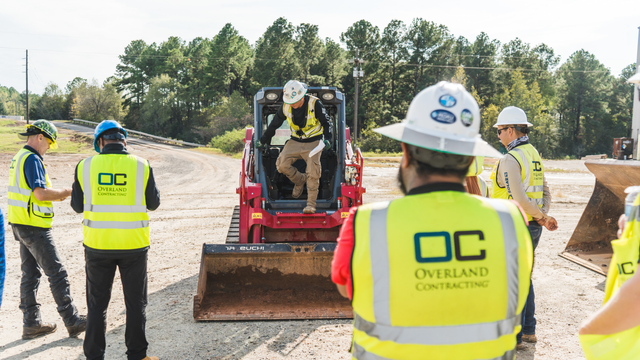
The project involved significant hazards over its four-year construction period. Heavy equipment operation. Blasting and rock fall. Heat stress as well as frost bite. The team supported a strong, unified safety culture, developing and regularly updating a health and safety plan, engaging in daily and monthly meetings and promoting a universal stop-work authority. The results were evident. The project logged nearly one million hours with incident rates only a third of the national average.
After hurdles created by the naturally occurring uranium on site are resolved, the reservoir will be filled, and water deliveries will begin. That will mark a new era for water reliability in the region. It will also mark a new standard in dam construction in Colorado and beyond, buttressed by the Black & Veatch construction management team’s leadership, technical expertise and commitment to Northern Water’s goals.