Apple podcast
Listen now

Kyle Haberberger joins Setting Course, an ABS Podcast, to discuss where FLNG is headed and what's driving the momentum.
Meet the expert
Kyle Haberberger specializes in LNG and FLNG business development at Black & Veatch. He brings a process engineering background to commercial strategy, supporting clients across the full LNG value chain including liquefaction, floating LNG, and regasification. Kyle has contributed to global energy projects including the Golar Hilli FLNG and Exmar Tango and is the author of a liquefaction patent involving Black & Veatch's proprietary PRICO® process.

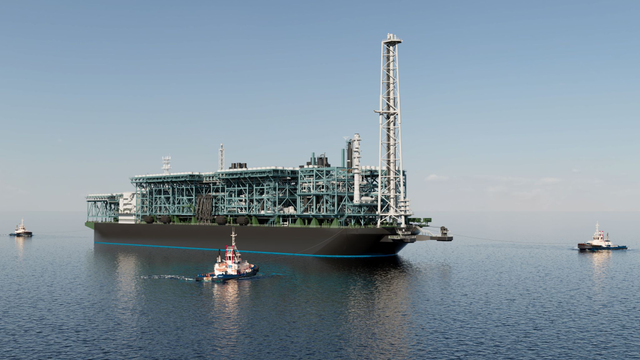
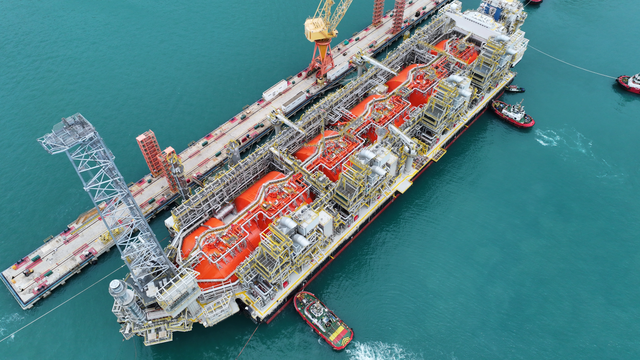
Floating LNG refers to offshore facilities, typically vessel-based, that liquefy natural gas at or near the source rather than piping it to an onshore plant. By moving construction to controlled shipyard environments and avoiding the complexity of onshore development, FLNG reduces project risk, shortens timelines, and gives developers the flexibility to relocate assets as markets shift. As global demand for LNG grows, FLNG is moving from niche alternative to first-choice solution for gas monetization.
The FLNG sector is growing fast. As project developers look for ways to reduce risk, lower capital requirements and reach market faster, FLNG is moving from niche alternative to first-choice solution for gas monetization.
In this episode, Black & Veatch's Kyle Haberberger joins host Brad Cox and ABS FLNG business development lead Terrance Roberts for a conversation covering the current state of the FLNG market, how floating solutions compare with traditional onshore development and where the industry is heading next.
Black & Veatch is clearly a leader in this space with 7 of the 14 floating LNG projects globally utilizing Black & Veatch’s PRICO liquefaction technology and engineering expertise.
FLNG vs. onshore LNG: Traditional onshore development faces labor shortages, remote site access, security concerns and geopolitical uncertainty. FLNG isolates projects from these risks by shifting construction to controlled shipyard environments with guaranteed skilled labor, predictable schedules, and higher quality control.
Yes, and it's already happening. The Tango FLNG has produced LNG on three different continents in less than eight years. Petronas' PFLNG1 has relocated. The Golar Hilli is scheduled to move from Cameroon to Argentina. Redeployment gives developers commercial flexibility that traditional onshore facilities simply can't offer.
Nearshore floating LNG positions a vessel close to shore rather than over a deep-water well. It simplifies offshore design challenges (waves, wind, offloading) while still avoiding the construction risk, environmental disruption and labor challenges of building onshore. Cedar LNG in British Columbia, majority-owned by the Haisla First Nation, is a leading example: floating LNG made it possible to develop the resource while respecting the community's relationship with the land and water.
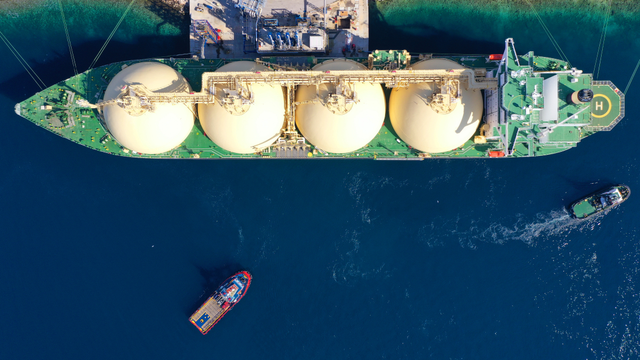
Rather than scrapping aging LNG carriers, developers are repurposing them as floating liquefaction facilities. Golar currently operates two and is constructing a third converted carrier-based FLNG. The conversion approach allows parallel construction (hull and topsides on separate paths), cutting both schedule and cost.
PRICO is Black & Veatch's proprietary single mixed refrigerant liquefaction process. It's compact, lightweight, and operationally simple, which makes it a natural fit for floating applications where deck space, weight, and crew size are critical constraints. Black & Veatch pairs the technology with full EPC integration, delivering complete topsides as a single product rather than assembling separate vendors. That combination of proven technology and execution capability is what the financing community looks for when evaluating project bankability.
Developers are embracing remote operations, digital twins, and automated systems to make floating facilities safer and more efficient with smaller crews. Black & Veatch also has a dedicated cybersecurity team focused on OT/IT integration for industrial facilities, helping clients manage the growing intersection of physical infrastructure and cyber risk.
The same principles that made FLNG viable (risk reduction, modular construction, flexibility) apply to a broader range of floating energy infrastructure: floating hydrogen, floating ammonia, floating methanol, and even floating nuclear using small modular reactors. Black & Veatch sees floating infrastructure as a platform for delivering critical human infrastructure across the energy value chain.
FLNG is no longer a niche alternative. Floating solutions are becoming a key pathway for gas monetization as developers rethink how projects are built and deployed.
Risk reduction is emerging as a primary driver. Developers are increasingly looking at FLNG as a way to navigate labor, access, and geopolitical challenges tied to onshore projects.
Redeployment is reshaping project flexibility. The ability to relocate assets is opening new options for how and where LNG projects can evolve over time.
Nearshore FLNG is opening new possibilities. Projects like Cedar LNG highlight how floating solutions can align development with environmental and community priorities.
The future is broader than LNG. The same principles (modularity, risk reduction, flexibility) apply to floating hydrogen, ammonia, methanol, and nuclear infrastructure.
Execution capability still matters. Financiers look for the combination of technology track record and integrated delivery, which is what Black & Veatch brings through PRICO and full EPC integration.